01 · Who's here

Working Document

The people and organisations working to make this data center happen
May 2026

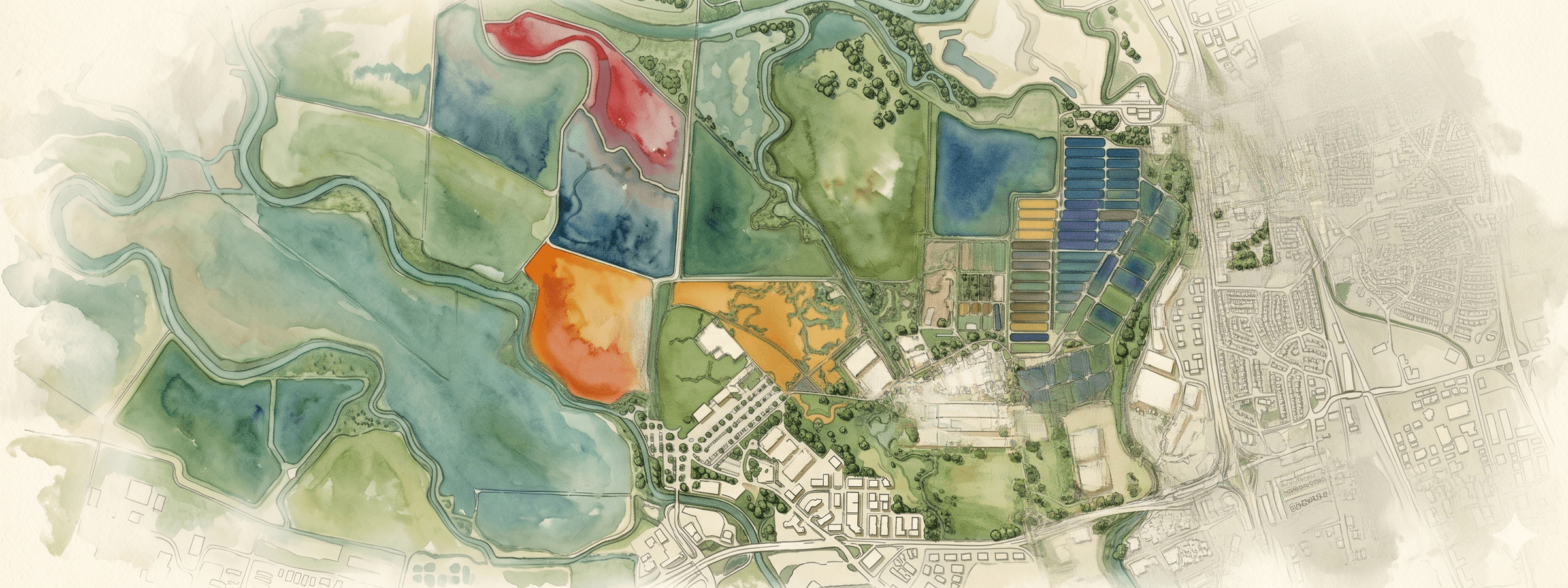
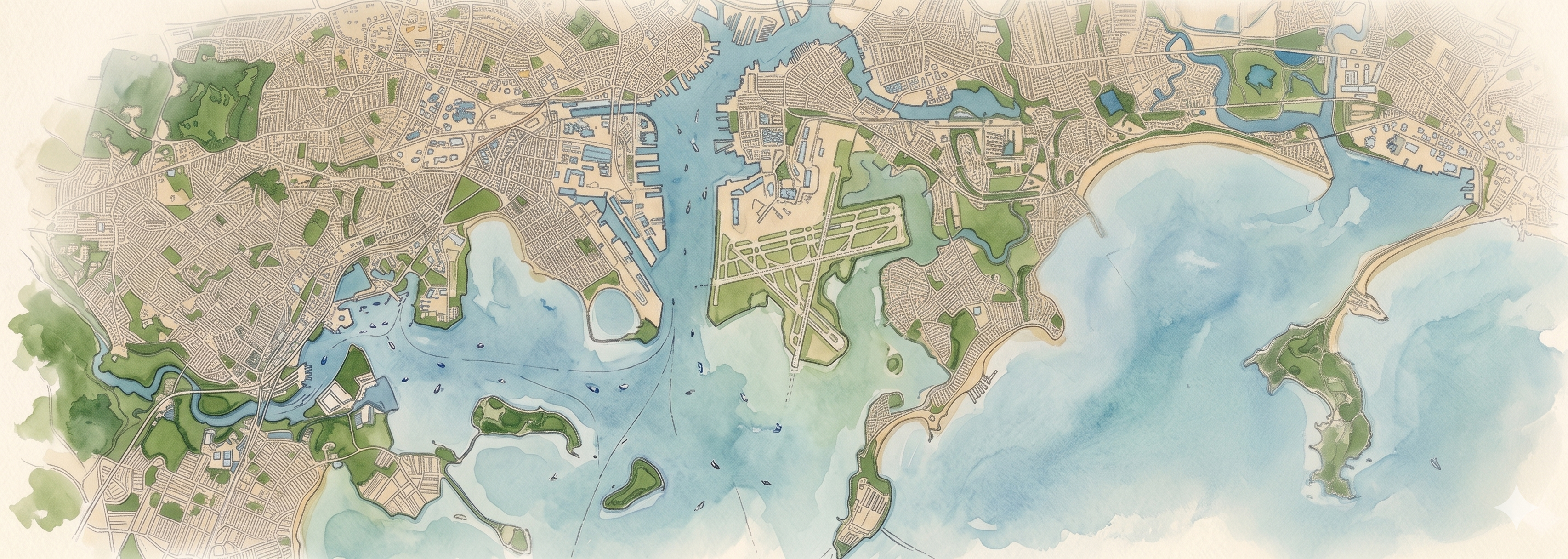
Watercolour aerial map of greater Boston, Boston Harbor, the Charles River basin, and Logan Airport, showing the geography of the MicroLink host site programme.
MICROLINK DATA CENTERS
  • Nick SearraCEO and Co-Founder
  • Sancha OlivierCEO, Design
  • Shane PatherChief Technology Officer
  • Andrew ThomasChief Commercial Officer
  • David HasslerHead of Sales
  • Jeff SvedahlCEO, MicroLink Edge
  • Deniz AkgulCapital and Investment Advisor
  • Boston Project DirectorTBD
PROJECT WORKING GROUP
  • Maddy Fairley-Wax, P.E.Jacobs
  • Mats ErikssonArctos Labs
  • Deborah S EgelandSage Oak AI
  • Ryan BirdFuelCell Energy
NVIDIA
  • Jumbi Edulbehram, PhDVP Global BD, Public Sector · host
  • Andria ZouSr Director, Global AI DC Strategies
  • Jared CarlGlobal AI Data Center Lead
  • Karthik MandakolathurProduct Manager, Magnum IO
  • Elad BlattHead BD, Telco Networking
  • Ben GueretTechnical Program Manager
  • Danny ZaidifardBD, Strategic Partnerships
  • Alex PazosSr BD Mgr, Smart Spaces
  • Claudio FassiottiEnterprise Lead, Africa
  • Wendy Zhu, PhDValidation, partner-adjacent
  • Chris ChoCloud and partner technical
  • Rodney ShetlerPre-sales and Solutions Eng.
  • David MessinaInception VC Alliance, adjacent
01 · Thesis

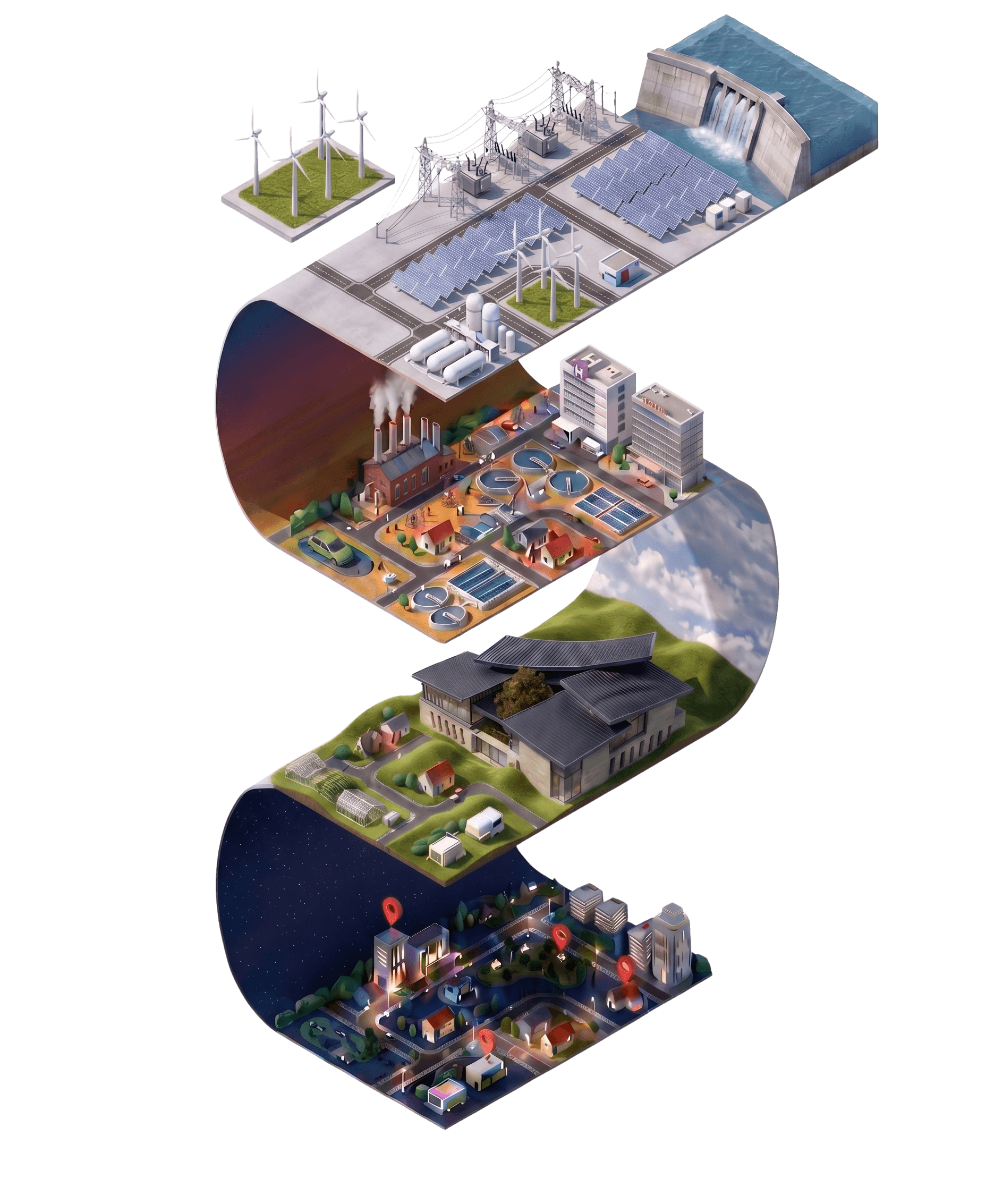
The second chapter is heat

A programme thesis for the Boston metropolitan area.

Greater Boston has the densest concentration of AI compute demand outside the hyperscaler corridors, a binding emissions ordinance with no clean path to gas heat at scale, and the highest concentration of compatible heat recovery host sites in the United States. The three line up once.

MicroLink builds containerised liquid cooled data centers that export waste heat at 65 °C [149 °F] into a host facility's existing thermal infrastructure. Across greater Boston, we are systematically reviewing host sites in three categories: edge sites at 50 kW, district energy systems at 2 to 20 MW, and wastewater treatment plants at 2 to 20 MW. The customer demand is 80 to 220 MW of credible AI compute load between 2027 and 2030. The regulatory pathway is BERDO 2.0, where heat displacement counts directly on the host's reported emissions. The political pathway runs through the Healey administration's $4.3 billion in active clean energy capital programmes and the Wu administration's BERDO Review Board.
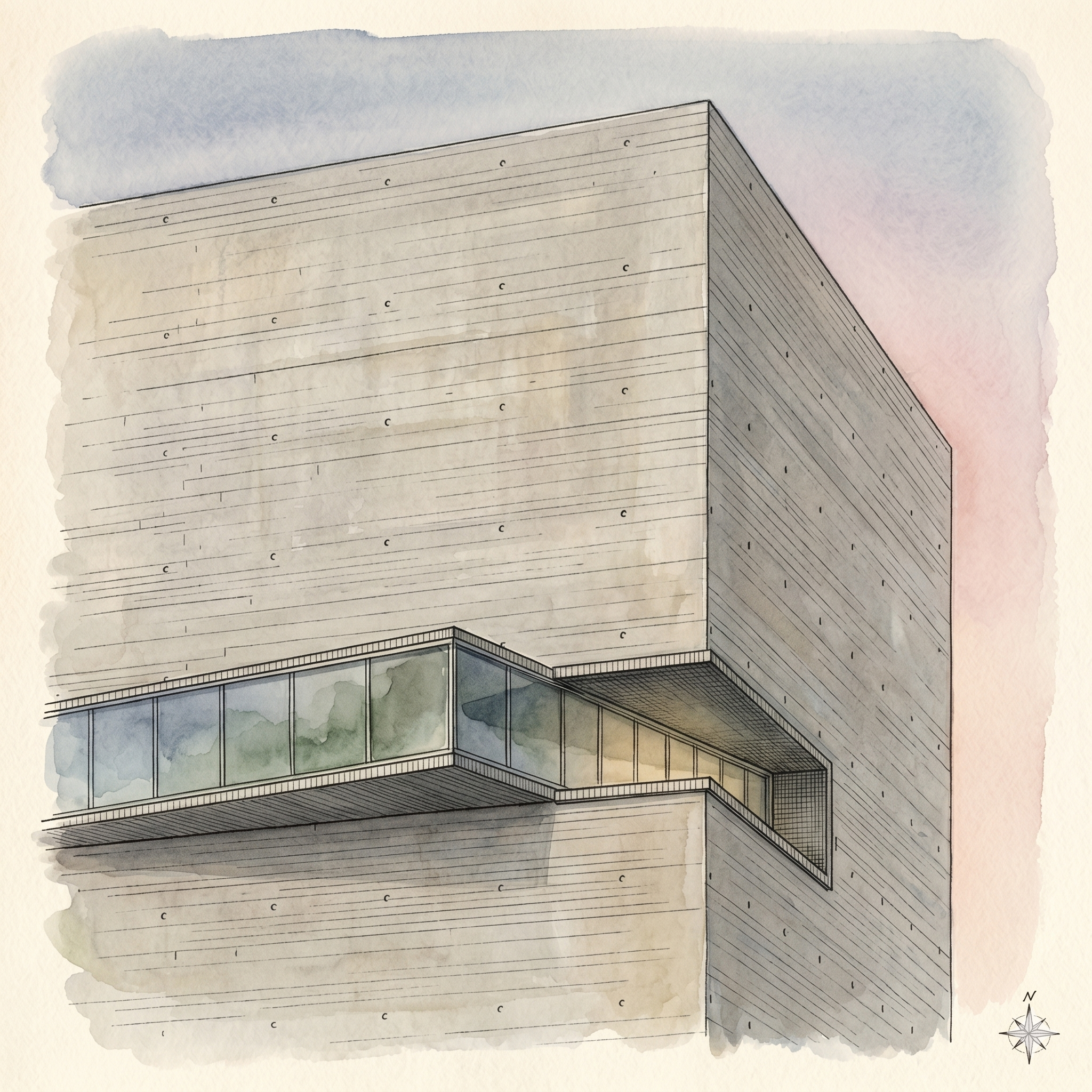
Watercolour rendering of a MicroLink data center module at building corner detail, north-facing orientation, illustrating the architectural language for the Boston programme. IMAGE · Hero MicroLink module · architectural detail. img-1-1
The core claim

Boston is the highest-fit metropolitan area in the United States for heat recovering AI compute. The host site supply, the customer demand, the regulatory pathway, and the state capital programmes all converge inside the same 18-month window. The Boston programme is positioned to be the reference build for what verified low carbon AI compute looks like in every coastal US metro that follows.
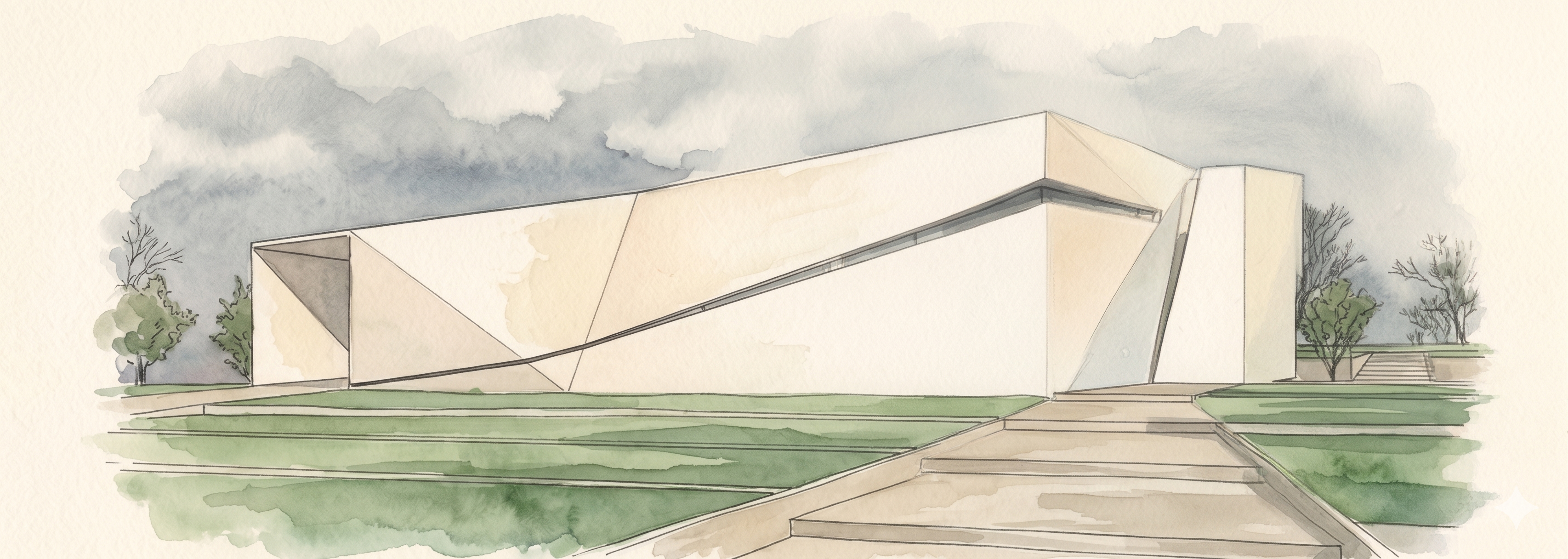
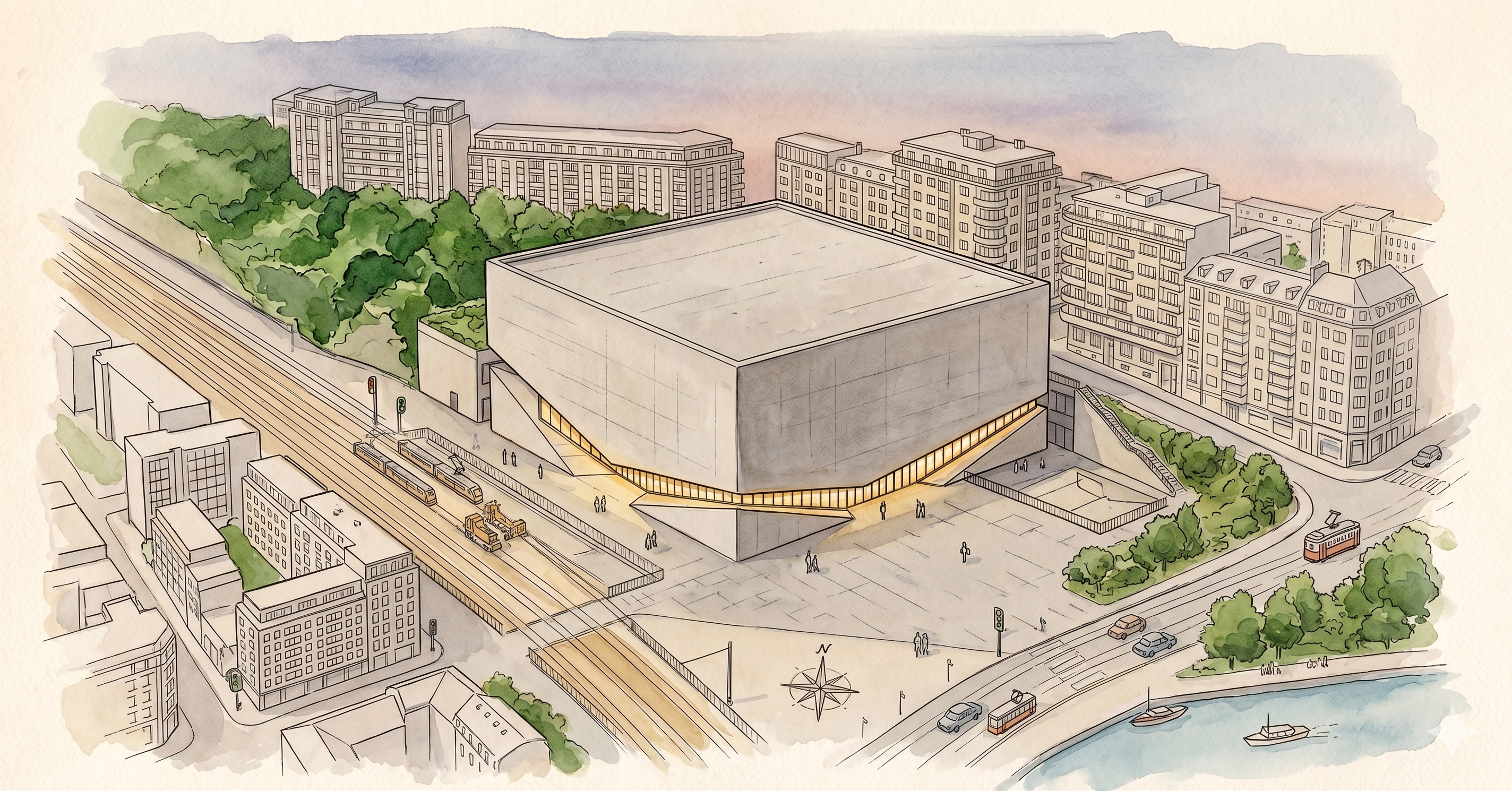
Watercolour rendering of a MicroLink data center module exterior, illustrating the architectural language for the Boston programme.
MicroLink module · the architectural language for the Boston programme.
02 · MicroLink

MicroLink designs, builds, owns and operates data centers inside of industrial facilities.

We review host sites systematically across these categories. The Boston programme shows the current shortlist across three of them: edge sites, district energy, and water treatment.

01 Wastewater treatment

Server reject heat returns to anaerobic digesters at 35 to 38 °C. Biogas powers the load through molten carbonate fuel cells.

02 Breweries

Reject heat at 60 to 70 °C feeds wort heating and clean-in-place water as a baseload thermal source replacing steam.

03 Hotels and hospitality

Sub-MW edge pods deliver 60 °C water for laundry, kitchens, hot water, and pools. Gas displacement plus on-property compute.

04 Hospitals

Hospital-grade 24/7 baseload heat with the redundancy hospitals already have. Thermal resilience plus campus compute.

05 District heating

Direct feed of 65 °C water into a district network return loop. A year-round, weather-independent heat source.

06 Research campuses

University utility plants with district heating networks and on-site research compute demand. UW Seattle is canonical.

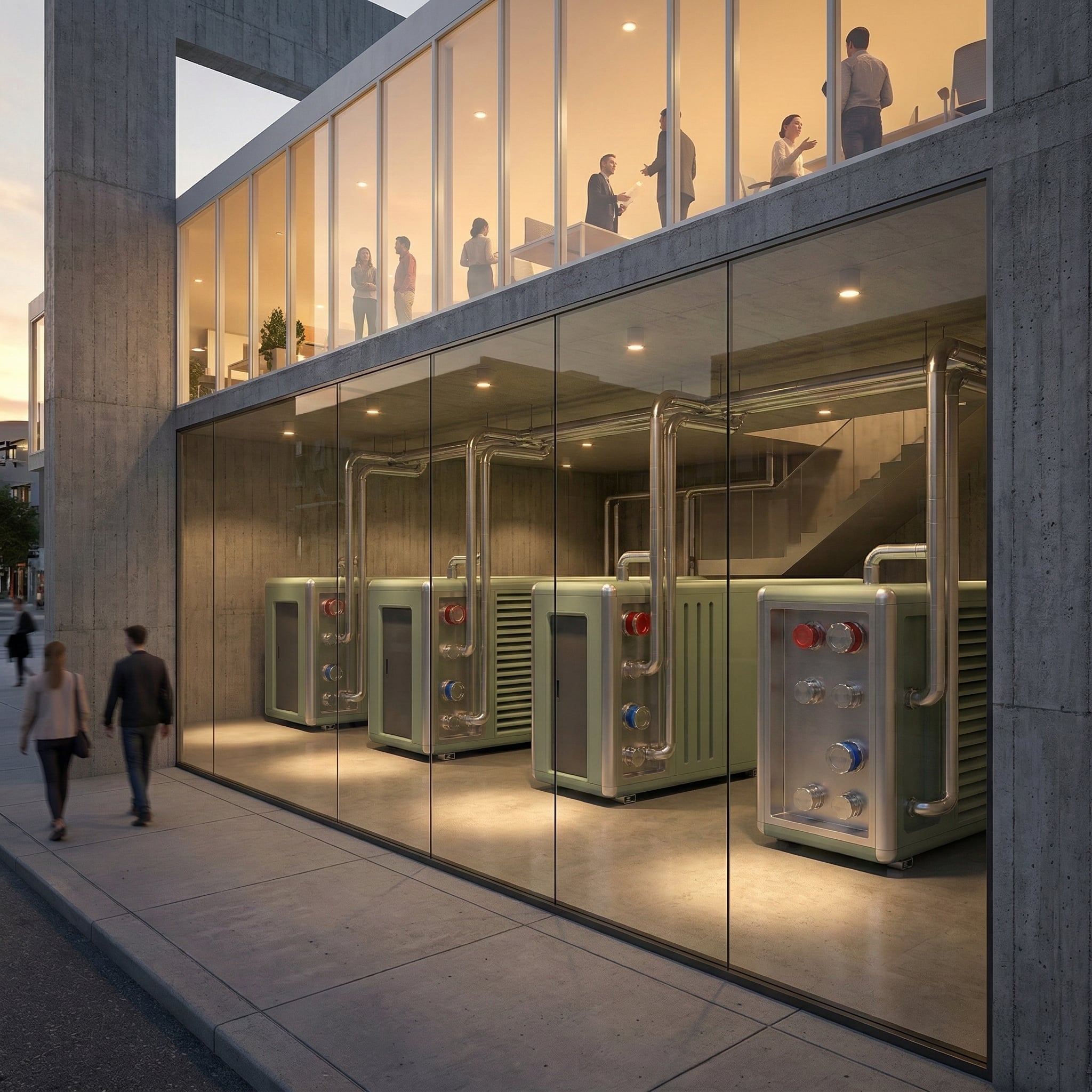
MicroLink glass-fronted facility, evening
The pods are modular, repeatable, upgradable. The buildings they live inside are not.
Service · 01

Distributed DC as a Service

Efficiency-driven compute, distributed close to where it's used. Liquid-cooled data centers on industrial host sites, with waste heat returned to the host process. Hosts contribute land and thermal offtake. Customers consume compute. The pods are modular, repeatable, upgradable.

I lived in Lagos for five years. Then Nairobi for five more. In 2001, if you weren't in the same room as someone in Nigeria, they were unreachable. No reliable post. No working landlines for most of the country.

Then GSM arrived. Half a million subscribers in 2001. Eighty million by 2010. Two hundred and twenty million today. Our current moment could be an even greater shift. It seems only right to ensure it's another good one.

Nick Searra
CEO and Co-Founder
Liquid-Cooled Colocation

02

High-density colocation.

GPU-as-a-Service

03

Managed NVIDIA clusters.

Inference-as-a-Service

04

Production model serving.

02.A · The portfolio · six projects, six host categories, one model
01 · Wastewater

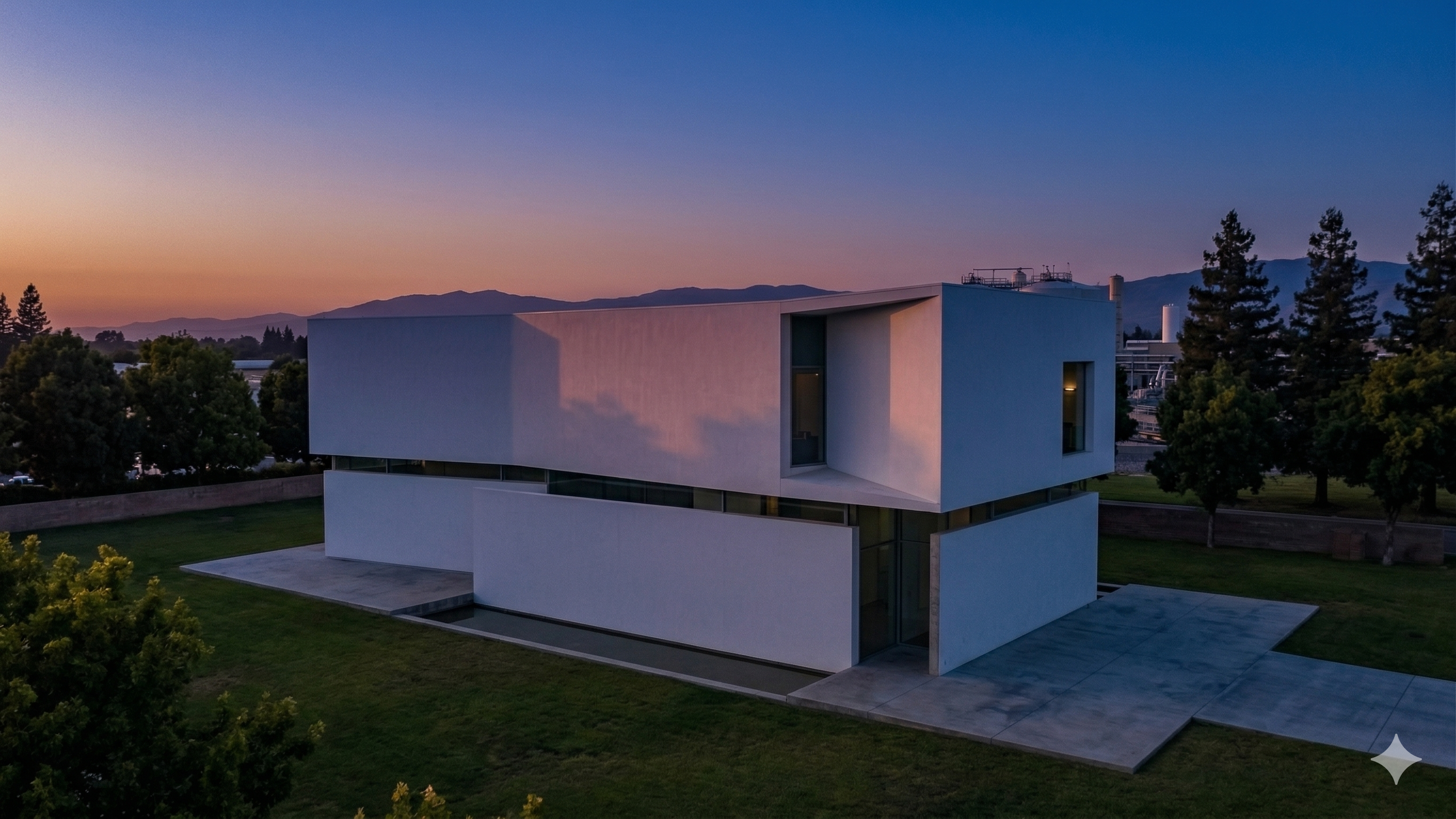
San José and Santa Clara RWF · California

The city-owned regional wastewater facility, 11 km [7 mi] from NVIDIA HQ. Site identified, characterised, and shortlisted as the lead candidate for a sovereign municipal AI cloud deployment. NVIDIA engagement is opening across multiple channels, beginning with the project working group convened in May 2026.

WORKING DOC · MAY 2026
11 km · 7 mi TO NVIDIA HQ
5 → 15 MW PHASED
San José–Santa Clara Regional Wastewater Facility · MicroLink data center at golden hour, modular white architectural form against South Bay foothills
02 · Wastewater

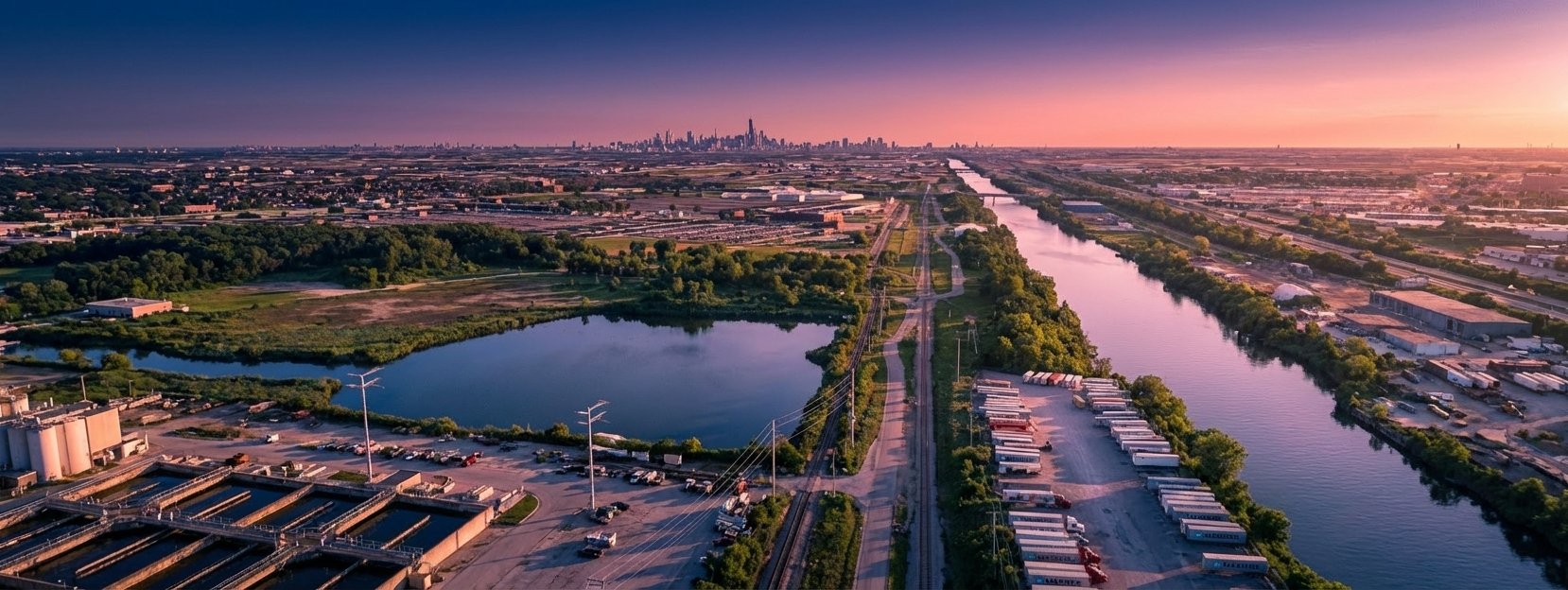
MWRD Stickney · Chicago

The largest wastewater treatment plant in the world. Engagement spans five MWRD teams across multiple working sessions. MWRD requested a deployment proposal, which we delivered. Proposal currently under MWRD legal review. Site supports a multi-phase deployment from first phase through scale.

LARGEST WWTP GLOBALLY
45 MW PHASED
124 COMMUNITIES
MWRD Stickney WWTP, aerial along the Sanitary and Ship Canal at sunset, Chicago skyline in distance
03 · Wastewater

Newtown Creek WRRF · Brooklyn, NYC

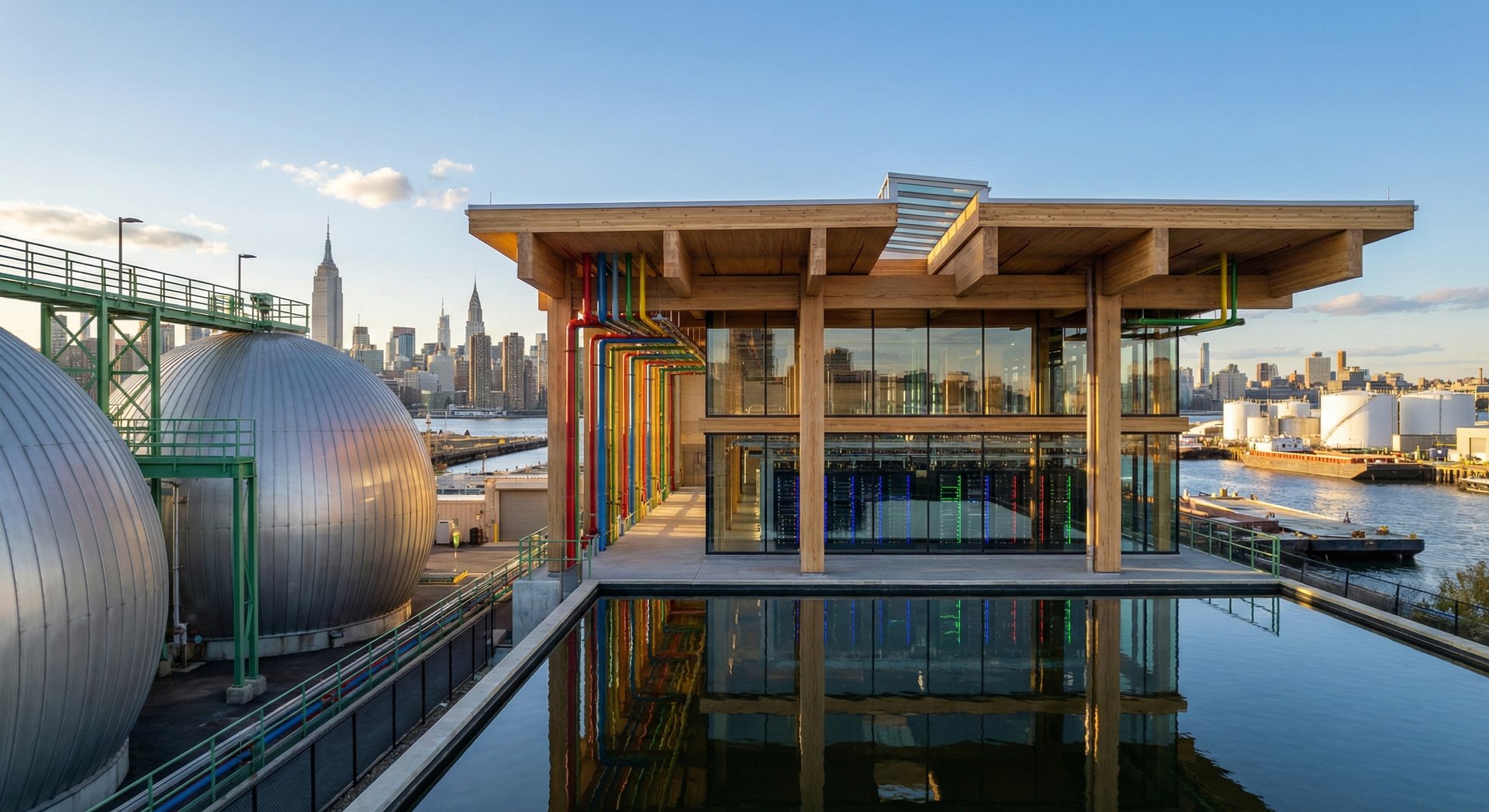
10 MW deployment integrating with the eight egg-shaped digesters that have made the site one of NYC's most photographed civic infrastructure landmarks. The first East Coast sovereign municipal AI candidate.

EIGHT DIGESTER EGGS
10 MW DEPLOYMENT
EAST COAST ANCHOR
Newtown Creek WRRF, silver digester eggs and waterfront pavilion with Manhattan skyline in distance
04 · Brewery

Anheuser-Busch · St Louis

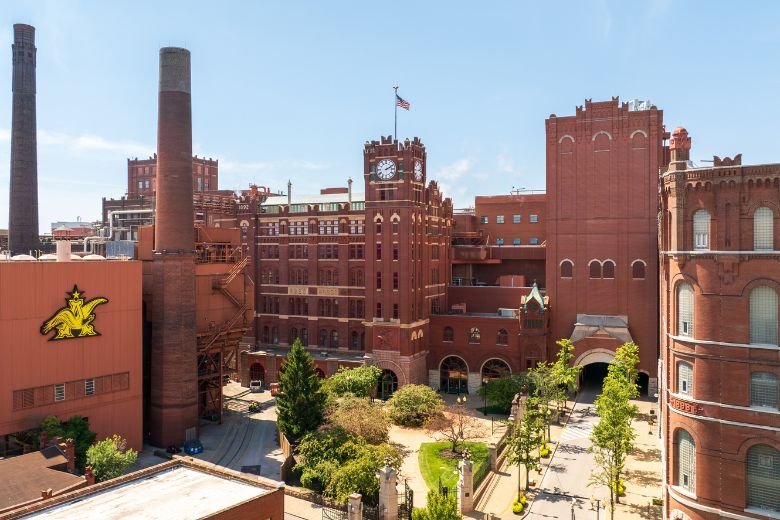
The largest beer production site in North America. Brewery as host category, with reject heat into wort and clean-in-place water as the deployment hypothesis. Initial engagement with the AB InBev technology team established the corporate-track framing. Pipeline qualification ongoing.

LARGEST US BREWERY
60–70 °C TO WORT
AB InBev TRACK
Anheuser-Busch brewery, St Louis · historic brick complex with twin smokestacks and clock tower
05 · District heating

University of Washington · Seattle

A pod at the West Campus Utility Plant Annex (P-4), tied into UW's Energy Renewal Plan. Phase 1 at 1 to 2 MW IT load, Phase 2 scaling to 3 to 5 MW. Reject heat at 65 °C feeds the new Primary Heating Water loop directly.

WCUP ANNEX P-4
1 → 5 MW PHASED
UW ENERGY RENEWAL
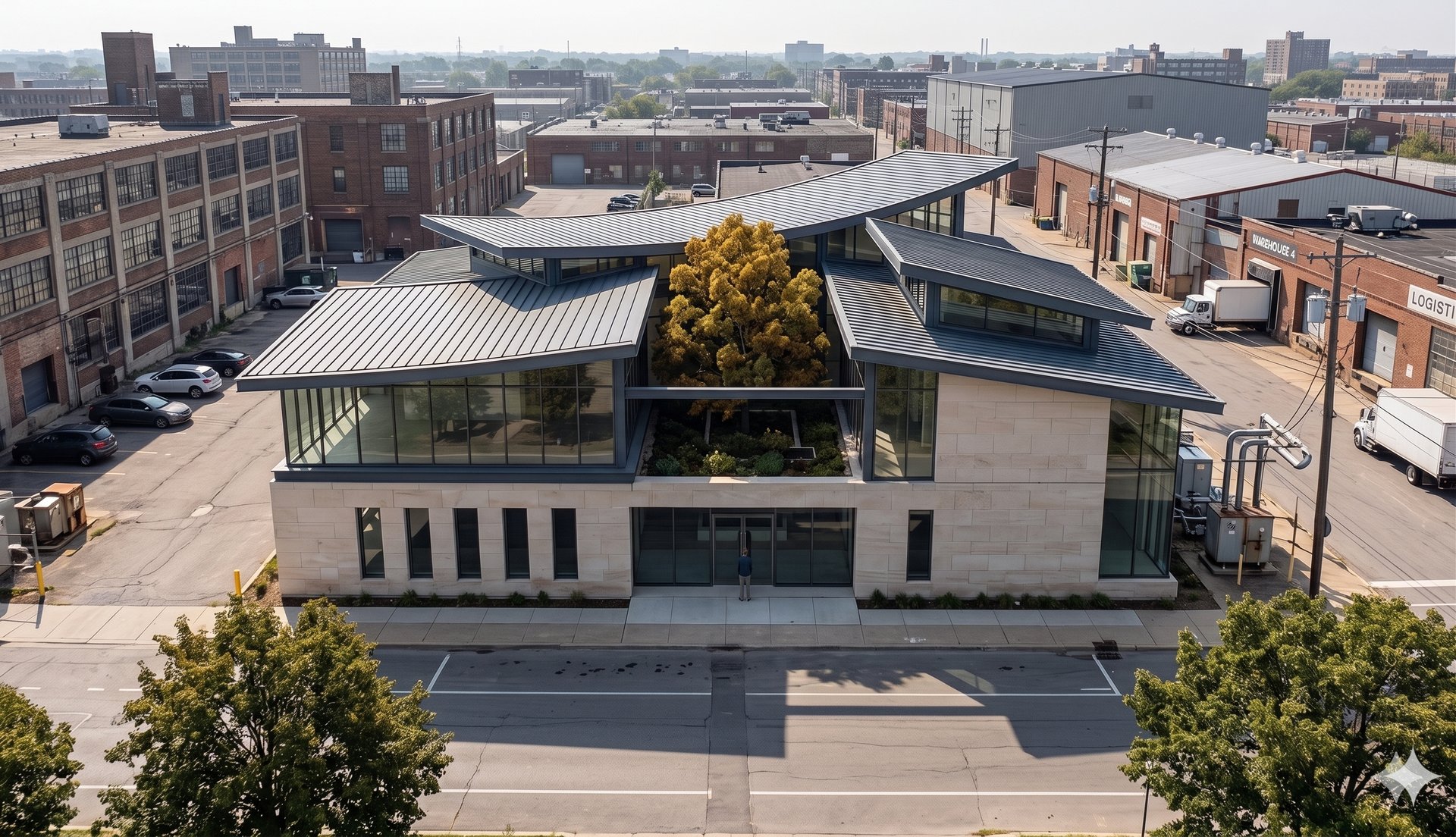
UW West Campus Utility Plant Annex · modern facility with curved zinc roofline in industrial setting
06 · Hospitality

Choice Hotels · 25-site pilot

A 25-site initial deployment scaling to 200 properties under Phase 2, structured as the MicroLink Edge SPV. Sub-MW pods per property using NVIDIA Jetson Orin and IGX at the host edge, federated back to regional cores at MicroLink WWTP and brewery sites.

25 → 200 PROPERTIES
SUB-MW PER POD
MicroLink EDGE SPV
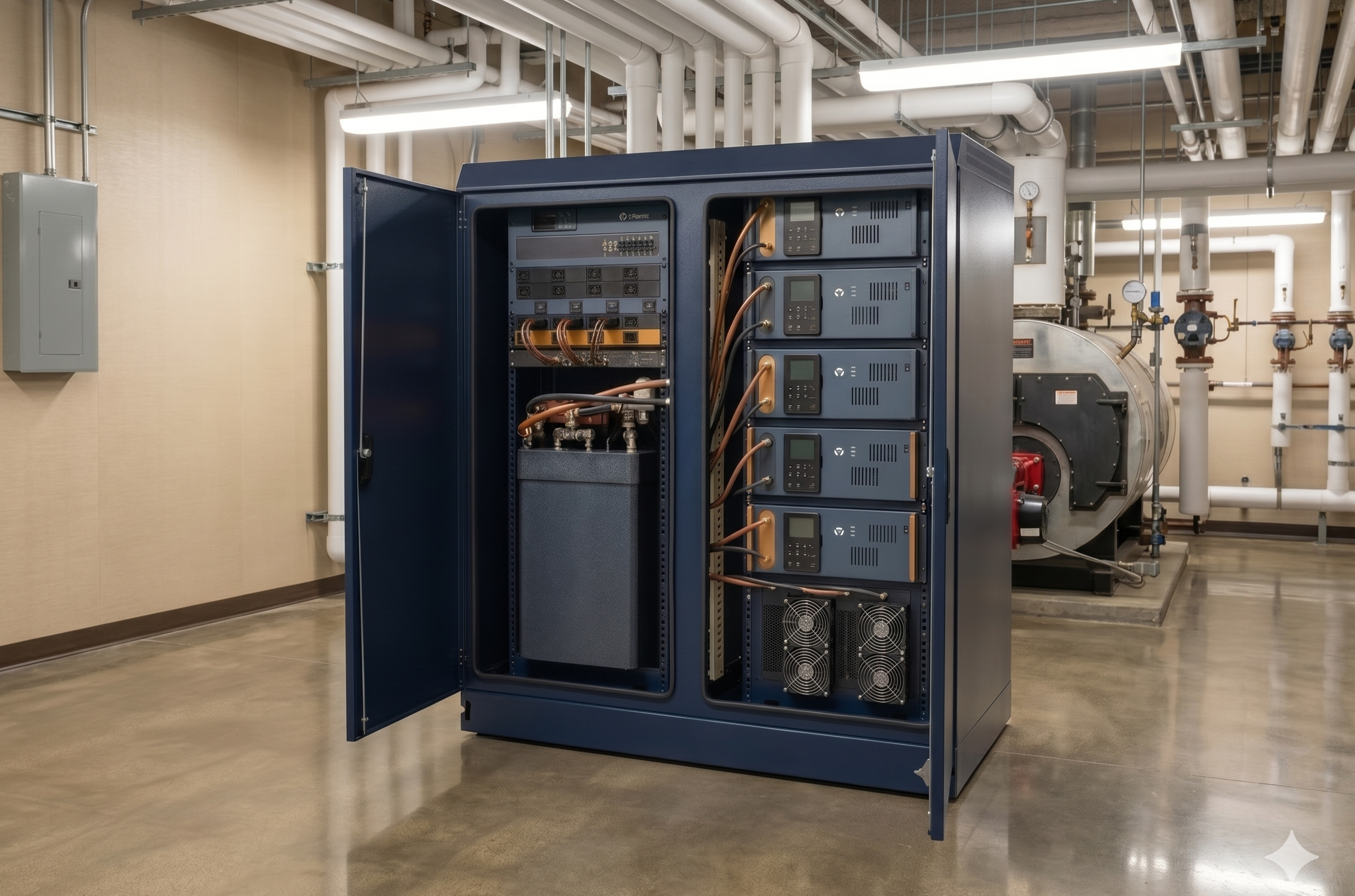
MicroLink Edge SPV cabinet inside hotel mechanical room, full-context view with copper-piped thermal coupling and adjacent boiler
Wastewater treatment facility, clarifier basins and treatment cells, generic
Customer clusters 2 of 2
02.B · Who buys the compute

Four customer clusters across greater Boston

Greater Boston AI compute demand sits in four geographic clusters. Each cluster has a distinct buyer profile, a distinct procurement cycle, and a distinct pairing with a host site in the Boston programme. The four clusters together represent 80 to 220 MW of credible IT load between 2027 and 2030.

Cluster 01 · Highest density

Kendall Square AI-native and biotech

LocationEast Cambridge · Kendall T station · MIT campus edge Addressable45 to 120 MW IT ProcurementQuarters AI-native PremiumHigh on-premise Host pairingVicinity Kendall district energy

The densest single concentration of AI-relevant compute demand in greater Boston. AI-native foundation model and product companies share the cluster with the largest cohort of biotech and pharma research operations in the United States, all within a roughly one square mile footprint.

Named buyers

Liquid AI · Suno · Lila Sciences · Generate Biomedicines · Moderna · Vertex · Biogen · Takeda · Sanofi · Pfizer · Novartis NIBR · AstraZeneca · BMS · Lilly · Amgen · Roche Genentech · Bayer

Cluster 02 · Hospital AI

Longwood Medical Area

LocationLongwood Addressable15 to 40 MW IT Procurement12 to 24 months Host pairingMATEP (assessment in progress) plus adjacent district energy

The largest single concentration of hospital AI compute demand in the United States. Cardiology, imaging, oncology, and clinical decision support workloads consolidating on private infrastructure to protect PHI under HIPAA. MGB and BCH already operating production AI; the next wave is procurement-cycle locked.

Named buyers

Mass General Brigham · Boston Children's CHIP · Dana-Farber · BILH · BMC · Tufts Medical

Cluster 03 · Harvard research

Allston

LocationAllston Addressable10 to 30 MW IT ProcurementPlanning Host pairingHarvard Allston District Energy Facility

Harvard's research computing demand consolidating around the Kempner Institute (1,144 GPU cluster by Spring 2026, 1.79 exaFLOPS, hosted at MGHPCC) and FAS Research Computing overflow. Allston DEF is the campus thermal partner.

Named buyers

Kempner Institute · Harvard SEAS AI Institute for Dynamic Systems · T.H. Chan C-CHANGE · Broad Institute Schmidt Center

Cluster 04 · BERDO-forced

Financial District

LocationFinancial District Addressable10 to 30 MW IT Procurement2030 binding Host pairingEdge sites within Financial District buildings

Asset managers and insurers facing BERDO 2030 caps with no clean alternative to gas heating at scale. The forced demand is for verified low carbon heat as much as for AI compute. Edge deployments inside their own buildings convert two problems into one solution.

Named buyers

Fidelity FCAT · State Street · Wellington · Putnam · MFS · Eaton Vance/Morgan Stanley · Bain Capital · Liberty Mutual · John Hancock · MassMutual

The pairing is what makes Boston a heat recovery market rather than a generic colocation market. Each cluster has a host site geographically and thermally matched to its demand profile. Verified low carbon heat is the differentiator that crosses every cluster.

Eleven zones of collaboration. Named participants on each one.

Cluster A · The build

Engineering

Grid independence, heat recovery, fabric, monitoring, design. Four zones of joint engineering.

Cluster C · Contributions

What flows back

Open-source contributions, datasets, semantic conventions. Workforce pipeline with San José State University and the NVIDIA Deep Learning Institute. Two zones of contribution to the broader compute and energy industries.

Cluster D · The Boston context

Where Boston anchors

Three zones of regulatory pathway, generation strategy, and state positioning. Boston-specific work that anchors the wider eleven.

Zone 01 · Regulatory

BERDO 2.0 compliance pathway

Heat exported into a host facility's thermal infrastructure displaces natural gas at the host meter and counts directly on reported emissions under Boston's Building Emissions Reduction and Disclosure Ordinance. The working document advancing heat recovery as a recognised methodology with the BERDO Review Board.

MicroLinkNick Searra
NVIDIATBA
Explore further
Zone 02 · Energy

Generation strategy at host sites

On-site electricity generation configurations under exploration across Boston host categories. Biogas solid oxide fuel cell at water sites, behind-the-meter cogeneration at district sites, solar plus battery across all sites. Posture is open and evolving by host category.

MicroLinkShane Pather
NVIDIAJared Carl
Explore further
Zone 03 · State

MGHPCC positioning

A heat-recovering, grid-flexible, containerised path for AICR ST2 and ST3 on the undeveloped acreage at the Massachusetts Green High Performance Computing Center in Holyoke. Prepared for the Mass AI Hub, EOED, and the EPRI DCFlex bridge.

MicroLinkNick Searra
NVIDIATBA
Explore further
Zone 04 · Build

Grid independence and heat recovery

Diesel-free 2N power topology. Host-process-aligned generation as prime: solid oxide fuel cell on biogas at water sites, behind-the-meter cogeneration at district sites, solar plus battery at edge sites. LFP for transient. PEM hydrogen for ramp. Server reject heat into host process loop. The closed thermodynamic loop.

MicroLinkShane Pather
NVIDIAEnergy team + Jared Carl
Explore further
Zone 05 · Build

Inter-pod and multi-site fabric

Quantum-X800 + AC SU at 576 GPUs, twin-plane fat tree. Spectrum-X for multi-tenant scale-out. Site-to-site federation via Spectrum-XGS. Edge-to-core hierarchy with Jetson at sub-MW host sites.

MicroLinkShane Pather
NVIDIAKarthik Mandakolathur
Explore further
Zone 06 · Build

Monitoring and control

DCGM, NVML, Mission Control at IT layer. Metropolis for building-as-managed-asset. Omniverse / DSX Blueprint for digital twin. Jetson / IGX Orin for facility-side control loops.

MicroLinkShane Pather
NVIDIAPlatform team · Pazos · Fassiotti
Explore further
Zone 07 · Build

Data center design

Liquid-cooled from day one. Sized for next-gen hardware envelopes (B300, Vera Rubin path). Architectural shell with civic intent. Co-developed reference architecture for the canonical pod.

MicroLinkSancha Olivier
NVIDIAJared Carl + Andria Zou
Explore further
Zone 08 · Product

Sovereign public-sector AI

One of MicroLink's four product lines, alongside colocation, GPU-as-a-Service, and inference-as-a-Service. Confidential compute, multi-tenant isolation, per-tenant clusters, sovereign fine-tuning on local weights. Six public-sector customer segments.

MicroLinkNick Searra
NVIDIAEdulbehram · Pazos · Gueret
Explore further
Zone 09 · Product

Sustainability and climate reporting

Co-authored white paper. ERE, ERF, WUE, CUE, PUE published metrics. EU EED 2027 waste-heat compliance. BERDO 2.0 (Boston) · California SB 253 / SB 261 / AB 1305. Net Grid Energy Position. ISO 14064-3 third-party assured.

MicroLinkShane Pather
NVIDIAAndria Zou
Explore further
Zone 10 · Contributions

Open-source contributions

Heat-coupled control loop to LF Energy. FacIT semantic conventions to OpenTelemetry. DSX Max-P module co-developed. OCP liquid-cooling spec. Thermal Lab dataset. Apache 2.0 default.

MicroLinkShane Pather
NVIDIADanny Zaidifard + Wendy Zhu
Explore further
Zone 11 · Contributions

Workforce and ecosystem

BU CISE · Boston Dynamics · MGHPCC workforce pipeline. NCA-AII entry, NCP-AIO exit. Three sub-tracks: liquid cooling, fuel cell, AI infrastructure operator. IBEW Local 103 / Plumbers Local 12 / Sheet Metal Local 17 trades alignment. Inception startup hosting at preferential rates.

MicroLinkJeff Svedahl
NVIDIAEdulbehram · DLI
Explore further
Energy balance 2 of 4
Design · Energy balance

San José energy balance, today and post-ADFU

The case for MicroLink at San José is not heat supply gap-filling. The plant has more cogen heat available than it needs. The case is thermal substitution: MicroLink absorbs the low-grade duty currently met by cogen, freeing high-grade cogen capacity for the new MHP module and freeing the post-upgrade biogas surplus for monetisation.

TodayPost-2022 cogen, pre-ADFU
Plant electrical demand~11 MW
Cogen output11–14 MW
Cogen recoverable thermal17–19 MW
Plant thermal demand5–7 MW
Heat rejected to atmosphere8–12 MW
Biogas production50,000–65,000 m³/d
Biogas energy600–900 MMBtu/d
Post-ADFU + MicroLink2028–2029
Plant electrical demand12–13 MW
Cogen output14 MW nameplate
Cogen recoverable thermal17–19 MW
Plant thermal demand7–9 MW
Heat rejected to atmosphere→ 0 MW (absorbed by MicroLink)
Biogas production85,000–120,000 m³/d
MCFC electricity (BTM)2.3 MW (FuelCell SureSource 3000)
MCFC thermal output1.8 MW
H₂ capability (tri-gen)up to 1,200 kg/day
Net grid draw at 10 MW IT8.9 MW (−21%)
CO₂ avoided11,750 tCO₂e / year

Two simultaneous shifts. First, biogas production increases by 60 to 80 percent through the combined MHP uplift and FOG co-digestion. Second, plant thermal demand increases only modestly because the new MHP module concentrates duty at 75 °C, not at the mesophilic temperature where most of the existing demand sits.

The combined effect: a substantial biogas surplus the existing 14-megawatt cogen cannot consume at full duty cycle, paired with a heat-rejection problem that has not improved. Both are resolved by a colocated thermal partner.

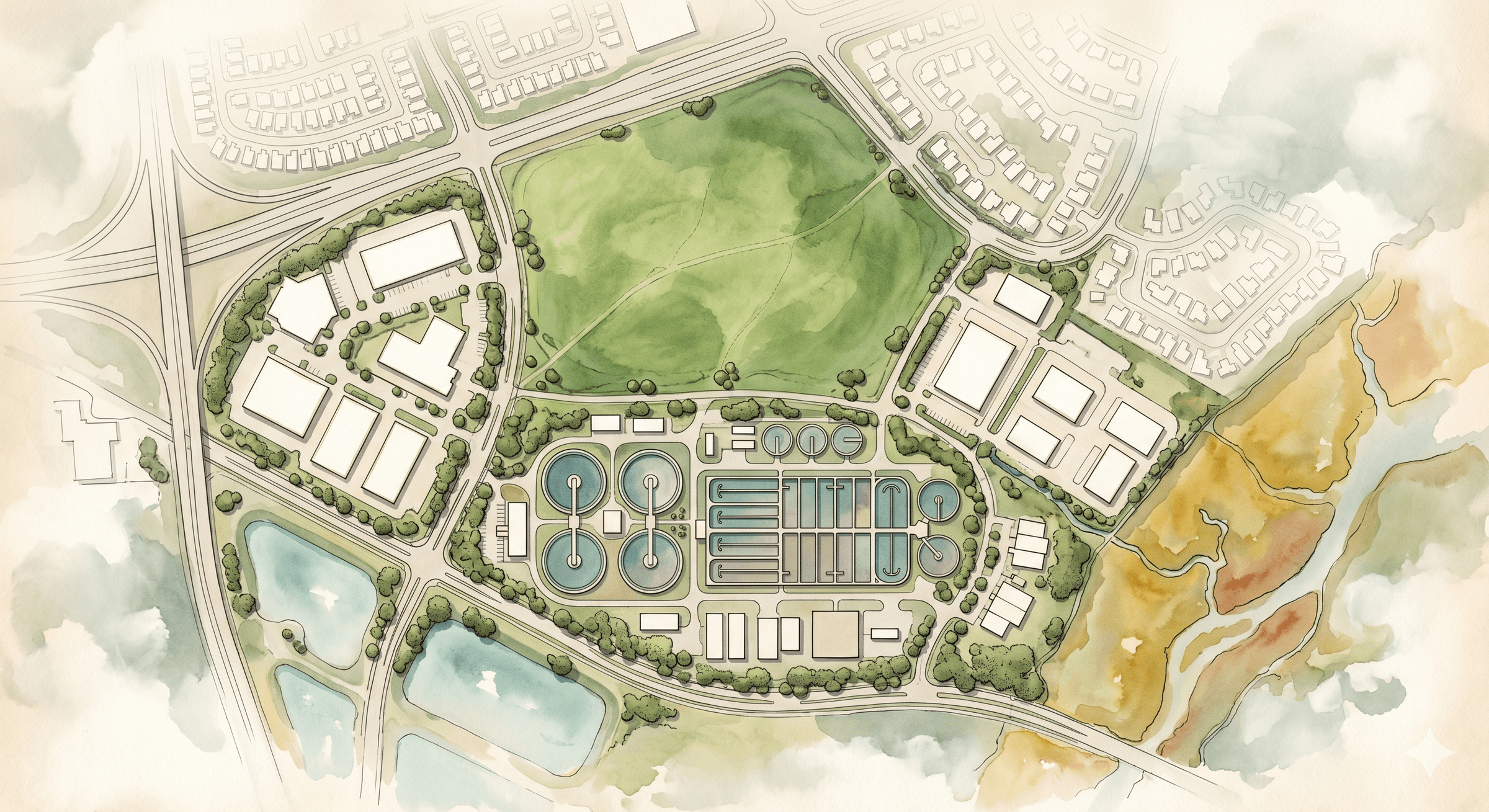
Aerial site plan, wastewater treatment facility, generic DIAGRAM · Sankey Biogas energy flow at a wastewater plant with anaerobic digestion: cogen consumption, digester thermal duty, hydrolysis duty, and surplus available for monetisation. img-5-1

Site plan · RWF and surrounding context.

S-section cross-section, integrated facility

Integrated facility section: compute on top, mechanical below, host process beyond.

The integrated facility section illustrates how a MicroLink deployment occupies a compact vertical envelope adjacent to the host process, with the thermal interface running horizontally between them at digester level. The MCFC sits behind the compute envelope, fed by the freed biogas line from the digesters.

Freed value 3 of 4
Design · Freed value

Three pathways for the freed biogas at 2026 California prices

The freed biogas (both the MHP and FOG yield uplift and the cogen displacement that MicroLink enables) has three monetisation pathways. Each has been priced at 2026 California market terms, drawing on CARB LCFS quarterly transfer reports through February 2026, CPUC Decision 24-08-007, the IRS final rule on Section 45V, the OBBBA, and the Jacobs McLeod and Horrax 2022 hydrogen series.

A
Cogen export and behind-the-meter offset
PG&E SRAC · BioMAT Cat 1 · retail offset
$19/MMBtu
range $8–33
Annual at 5–10 MW IT scale
$0.6–4M / year
Recommended
B
RNG injection with LCFS + D3 RIN
PG&E G-BIO interconnection
$20/MMBtu
range $15–25
Annual at 5–10 MW IT scale
$1.5–7M / year
C
Hydrogen via Pathway 5 SMR
Biomethane upgrading + SMR
$30/MMBtu
range $22–60
Annual at 5–10 MW IT scale
$3–18M / year
Range reflects 45V status uncertainty post-OBBBA.

Pathway B is the primary monetisation route at San José. The all-in value reflects 2026 California market conditions: CARB LCFS pathway value at $5–10 per MMBtu (post-2025 LCFS market amendments), federal D3 cellulosic RIN value at $5–10 per MMBtu, gas commodity at PG&E citygate at $3–4 per MMBtu, and avoided distribution charges. PG&E's Schedule G-BIO interconnection programme provides the technical pathway. SB 1440 capital incentives offset interconnection capex up to $3 million for non-dairy WWTPs. WWTP biogas carbon intensity is structurally distinct from deeply-negative-CI feedstocks like dairy or food-scraps RNG; the figures here reflect a realistic +30 to +55 gCO₂e/MJ Tier 2 pathway.

DIAGRAM · LCFS price trend California LCFS credit price, 2024–2026, with diesel benchmark and CNG-equivalent pricing overlaid. img-6-1
Aggregate value · central case

Combined gross value at the post-ADFU plant, with a 6 to 10 megawatt MicroLink IT deployment:

approximately $7 to $16 million per year

Freed-biogas pathways: $5–14M/year. Plus the MCFC tri-generation layer adds ~$1.8M/year of behind-the-meter electricity at avoided-cost rates. This is the prize. The commercial structure between MicroLink and the City (the value share between host and developer) is a separate negotiation. This figure illustrates the magnitude, not the eventual allocation.

Two-track partnership 4 of 4
Design · Partnership

A two-track partnership structure

The partnership is structured to protect each party's interests, to fit the ADFU project's design schedule, and to support MicroLink's ability to raise the capital required for the eventual deployment. It runs on two parallel tracks anchored on a sequenced commitment instrument: Expression of Interest, Letter of Intent, Definitive Agreement.

Track 1

The stub-out and the EOI

A future-ready thermal interface, designed and built by Jacobs as a defined scope addition to the existing $200 million ADFU progressive design-build contract.

Three interfaces
Tap on the mesophilic digester recirculation manifold; parallel branch on the cogeneration jacket-water return loop; tap on the raw sludge feed line.
Sized for
A future 5 to 10 megawatt thermal interface, designed by Jacobs to specification, owned by the City as part of the ADFU asset.
Funded by
MicroLink at approximately $1 million, contributed to the City under a Cost-Sharing Agreement structured through San José Charter §1217 (developer carve-out) layered on a Government Code §4217 finding (energy-services framework).
First commitment
A short-form Expression of Interest signed within 30 days, scoped to authorise inclusion of the stub-out concept in the ADFU design-basis discussion. Three EOIs together (City of San José, NVIDIA, Jacobs) anchor the equity raise that funds the stub-out and the eventual deployment.
Track 2

The LOI and the Definitive Agreement

Within 90 days of EOI signature, both parties commit to a full Letter of Intent. Within 9 months, the Definitive Agreement is signed.

Letter of Intent
Captures the technical specification, the commercial framework principles, and the timeline for Definitive Agreement negotiation.
Definitive Agreement
Land licence or lease for the future MicroLink facility on the freed footprint; thermal services agreement; biogas monetisation framework; operational protocols, performance standards, and dispute resolution; right of first negotiation for MicroLink on thermal interface use post-commissioning; information rights on plant operating data; performance milestones and termination provisions.
Trigger
The Definitive Agreement triggers escrow release on the stub-out funding. ADFU stub-out construction proceeds in base scope. MicroLink construction begins, with the modular first-deployment structure operational in the 2028–2029 window.
DIAGRAM · Escrow flow Escrow mechanics: EOI signed (Day 30) → LOI signed (Day 90) → Definitive Agreement signed (Day 270) → escrow releases on the stub-out funding. Capital protected on either path. img-8-1
The trigger

The two tracks are connected by a single trigger structure. The $1 million stub-out funding is held in escrow against execution of the Expression of Interest and releases on signature of the Definitive Agreement. If the Definitive Agreement does not sign, for any reason, the stub-out is value-engineered out of ADFU at no cost to the City, and the escrow returns to MicroLink.

This protects MicroLink's capital, gives the City a structured commitment, gives Jacobs a clean engineering scope, and creates a sequenced set of signed instruments (EOI, then LOI) that supports MicroLink's fundraising.

Eventual deployment scale
Eventual deployment capex$80–120 million
Stub-out contribution$1 million (~1%)
Term of host paymentsTBD in DA

MicroLink team: Nick Searra, CEO & Co-Founder · Sancha Olivier, Design, Site Inspection & Review · Shane Pather, CTO · David Hassler, Sales & Customer · Andrew Thomas, CCO · Deniz Akgul, Capital & Investment Advisor.

Roadmap 1 of 4

What's being built
from here

The Boston programme runs three workstreams in parallel. Site assessment across seven host candidates. Customer engagement across four clusters. Regulatory and capital advocacy across BERDO, ISO-NE, MassDEP, EOED, and Mass Leads / Mass Wins. Twelve months of work feeds three decision gates.

Watercolour rendering of a Boston urban data center site, illustrating the city context for the MicroLink programme.
Workstream 01 · Coalition outreach

Contact and convene the 241 named stakeholders

241 named contacts · eight categories · May 2026 onward

The Boston coalition is built in public. Host operators, customers, partners, research anchors, municipal and state leadership, investors, community organisations, trades. Every named contact receives a tailored first touch within the working window. The coalition is the deliverable.

Workstream 02 · Site review for offtake

Review every host site for thermal and electrical offtake

Seven host candidates · three categories · May to December 2026

Each site assessed across two dimensions: what we can recover from the site (waste heat, biogas, water flows) and what we can generate on site (biogas SOFC, behind-the-meter cogeneration, solar plus battery). Each site has its own thermal regime, regulatory pressure, customer adjacency, and decarbonisation roadmap. Phase 00 site walks in progress. Decision gate Q4 2026.

Workstream 03 · Partners and approvals

Lock in host partners, customer anchors, and city approvals

Host LOIs · customer LOIs · BERDO methodology · ISO-NE interconnection

Convert assessed sites into signed Letters of Intent with the host operator. Convert engaged customer clusters into anchor customer LOIs. Secure city and state regulatory pathways: BERDO Review Board methodology recognition, MassDEP WWER pilot, ISO-NE interconnection scoping. Definitive Agreements target Q3 2027.

Workstream 04 · Research and R&D

Lock in research partners and define R&D goals

BU CISE · MIT Decarbonization 2050 · Boston Dynamics · MGHPCC

Co-authored technical thesis anchored on the BU CISE / MIT Decarbonization 2050 axis. Joint research programmes on grid flexibility, retrofit thermal integration, robotics co-deployment, high performance compute operations. R&D milestones aligned to deployment timelines so the first Boston site is also the first reference research instance.

From here, the work

The eleven zones live at the link below.

Schedule a working session with the named owners in any zone. The first follow-up belongs to whoever wants it most.

Market case 2 of 4
07 · Path forward · The market case

What this becomes, beyond Boston

Boston is the first instance of a model that travels. The defensible US addressable market starts with 276 large wastewater resource recovery facilities operating anaerobic digestion. The defensible US district energy market adds 660 systems. The European market roughly doubles the long-run prize. Sources: EPA Clean Watersheds Needs Survey 2022; EPA Opportunities for CHP at Wastewater Treatment Facilities; IDEA US district energy directory; ENR rankings.

Universe Plants / systems IT load addressable Annual revenue Annual EBITDA
Boston metro programme 7 host candidates 50 to 80 MW IT $100M to $165M / yr $50M to $80M / yr
US large WRRFs with AD 276 plants 750 MW IT $1.5B / yr $0.75B / yr
US district energy top tier ~120 systems ~200 MW IT $400M / yr $200M / yr
EU + UK large WRRFs ~690 plants scales with district heating $1.0 to 1.6B / 10 yr not separately scoped
EPA CWNS 2022 17,544 publicly owned treatment works.
EPA CHP Opps 435 plants >10 MGD; 276 with AD.
IDEA US district energy directory.
Vicinity public decarbonisation roadmap.
MWRA 2023 GHG inventory.
ENR Top 500 wastewater rankings.
Methodology

Wastewater plant counts drawn from EPA's 2022 CWNS for the 17,544 POTW total and from EPA's "Opportunities for CHP at Wastewater Treatment Facilities" plant-size distribution. The 276 figure is the subset operating anaerobic digestion at production scale. District energy system counts drawn from the IDEA US district energy directory, narrowed to the top tier with thermal absorbable capacity over 5 MWth and an electrification or low carbon roadmap. MW of absorbable IT load is calculated by site-size band: 1 to 2 MW thermal absorbable per 10 MGD plant, scaling to 5 to 15 MW per 100 MGD plant for water sites; 2 to 10 MW per district network depending on integration architecture. Revenue at MicroLink's 2026 wholesale rate of $170 per kW per month. EBITDA at 50 percent margin reflecting NOAK unit economics. Boston metro programme range derived from the seven candidate hosts in the current shortlist.

European optionality

Roughly 690 large WRRFs across the EU and UK could host more than 1 MW of IT load each. Germany leads (around 220 sites), the UK (around 120), and combined Italy/Spain/France (around 200). Districts with established fourth-generation district heating networks (Denmark, the Netherlands, southern Sweden) substantially expand the absorbable thermal sink because excess heat above digester demand can flow into the local network rather than into a dry cooler. Capturable EU revenue over a ten-year horizon is between $1.0 and $1.6 billion.

Political framework 3 of 4
07 · Path forward · The political framework

Four entities. One pathway. A coordinated public-sector AI infrastructure model.

The opportunity in Boston is a template for how the public sector partners with industry to stand up AI compute infrastructure responsibly. Four entities define the pathway. NVIDIA as the certified compute partner. The host operators as the thermal counterparties. The Healey administration as the state capital and regulatory partner. The Wu administration as the city regulatory and political partner. Together with MicroLink, they deliver public infrastructure value at zero ratepayer cost.

The compute

NVIDIA

NVIDIA Cloud Partner programme certification ongoing. NCP Boston account engagement queued. Hardware platforms target Vera Rubin onward.

The hosts

MWRA · Vicinity · Harvard · GLSD

Seven host candidates under technical review across three host categories. Each carries a published decarbonisation roadmap or a regulatory pressure on heat. Phase 00 site walks in progress.

The state

Healey administration

EOED (Eric Paley) · EOTSS (Jason Snyder) · EEA (Rebecca Tepper) · MassDEP (Michael DiBara) · MassCEC · Mass AI Hub (Sabrina Mansur). $4.3 billion in active clean energy capital programmes: Mass Leads Act $4B 2024 plus Mass Wins Act $305M April 2026. State AI Hub as the policy anchor for carbon-free compute.

The city

Wu administration

Mayor Wu · CIO Santiago Garces · Chief Climate Officer Brian Swett · Environment Department · BERDO Review Board (Chair Jessica Boatright) · OET (Michael Lawrence Evans). Heat displacement counts directly on the host's reported BERDO emissions.

Four entities NVIDIA · Hosts · State · City
Centre MicroLink
Outcome Public-sector AI infrastructure
Outcomes: zero ratepayer impact · 50 to 80 MW of Boston AI compute capacity across three host categories · BERDO compliance pathway formally recognised · 30 to 60 MW of waste heat captured · a category-defining heat recovery model for the US northeast.

The Healey administration brings the state capital and the policy authority. The Wu administration brings the city regulatory and the political legitimacy. The host operators bring the thermal infrastructure and the decarbonisation mandate. NVIDIA brings the customer demand and the compute platform. MicroLink brings the heat recovery thesis and the deployable asset. Together, the five define how cities, states, and nations stand up AI infrastructure on existing public-sector and partner sites, with engineering rigour, political legitimacy, and climate integrity.

The category 4 of 4
07 · Path forward · The category

Beyond a single deployment. A category being defined together.

Boston is the first instance. The category is the integration of compute waste heat with industrial process at scale: a model that travels across coastal US metros, EU cities, and analogue infrastructure globally. The category is being defined through the Boston programme, anchored on the working group convened across 241 contacts.

MicroLink + the Boston coalition

MicroLink owns the data center side. The Boston coalition owns the host side and the customer side. Together the coalition covers the rare combination required to define this category authoritatively: deep operational experience at every layer of the thermal boundary, a published technical thesis (Coskun and BU CISE on grid flexibility; Reinhart and MIT Decarbonization 2050 on retrofit thermal; Sovacool on the limits to digitalisation), and seven candidate host sites that let MicroLink validate the integration model at operating scale across three host categories.

The work is co-development of a defined integration system: pre-engineered components, validated controls logic, a repeatable deployment package, a published case study from the first Boston deployment, and a co-authored technical paper led by the BU CISE / MIT Decarbonization 2050 axis. Joint authorship across academic anchors and operating partners is the dyad pattern Tier 1 EPCs use to anchor productised offerings.

This is materially more than a paper. It is the foundation for a generalisable system MicroLink can offer to any compatible host site globally, calibrated to local regulatory and political frameworks.

The opportunity at scale
Tier 1 · Boston programme
Seven host candidates across three categories

50 to 80 MW IT addressable. $100M to $165M annual revenue at NOAK scale. $50M to $80M annual EBITDA. The first instance of the category, with the regulatory and political frameworks built in public.

Tier 2 · US northeast replication
Coastal metros with comparable density and regulatory pressure

NYC (Newtown Creek already in portfolio) · Philadelphia · DC · Baltimore. 200+ MW addressable. Building emissions ordinances and district energy operators replicate the Boston preconditions across the eastern seaboard.

Tier 3 · Coastal global category
Wastewater plants and district energy systems with comparable preconditions

APAC coastal metros · EU cities with fourth-generation district heating · LatAm capital regions. The integration model defined here becomes the reference for how compute waste heat couples to municipal infrastructure worldwide.

The numbers are the prize. The work is the path. The technical definition of this category is being led jointly across the BU CISE / MIT Decarbonization 2050 axis, the operating host partners, NVIDIA, and MicroLink, anchored on the Boston programme and extending to wherever the model travels. The conversation starts here.

"Every coastal metro has a wastewater plant, a district heating network, and a regulatory pressure on heat. Boston is where we prove the equation closes at scale."

MicroLink Data Centers · Boston programme · May 2026

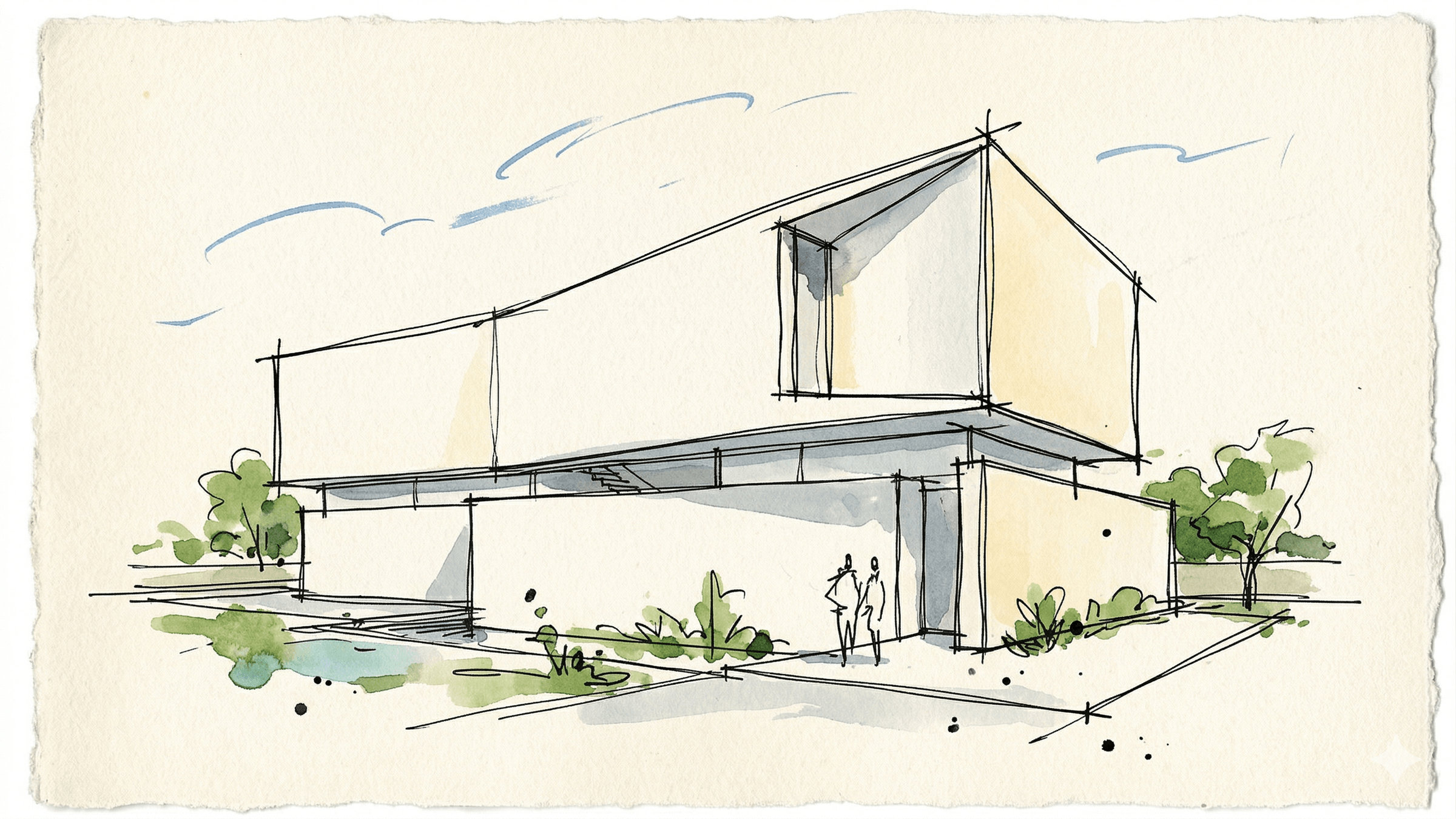
Architect's sketch, building elevation, generic

The category, sketched.

Engagement timeline · 12-month forward look
Lane
May 26Jun 26Sep 26Dec 26Mar 27Jun 27202820292030
HostsPhase 00 → live
Phase 00 site walks
Phase 01 thermal modelling
LOI drafting
DA negotiation
Construction 2028–29
CustomersAnchor LOIs → DAs
Cluster outreach
RegulatoryBERDO · WWER · ISO-NE
BERDO methodology engagement
ISO-NE interconnection scoping
Coalition241 contacts
Working group convening · ongoing

Day 0 · May 2026 · Boston programme convenes. Phase 00 site walks across seven host candidates begin. Customer cluster outreach opens across 51 named buyers. BERDO Review Board engagement begins. Q4 2026 · decision gate on which host candidates advance to LOI. Q1 2027 · anchor customer per advancing host. Q3 2027 · Definitive Agreements signed. 2028 · construction begins. 2030 · first Boston deployment operational.

A1 · Questions

Five questions
we keep asking

Not a questionnaire. A way of opening a conversation that continues from here. These are the questions MicroLink keeps thinking about: the ones where another perspective would change how we think. Rank what resonates, add a note, or both.

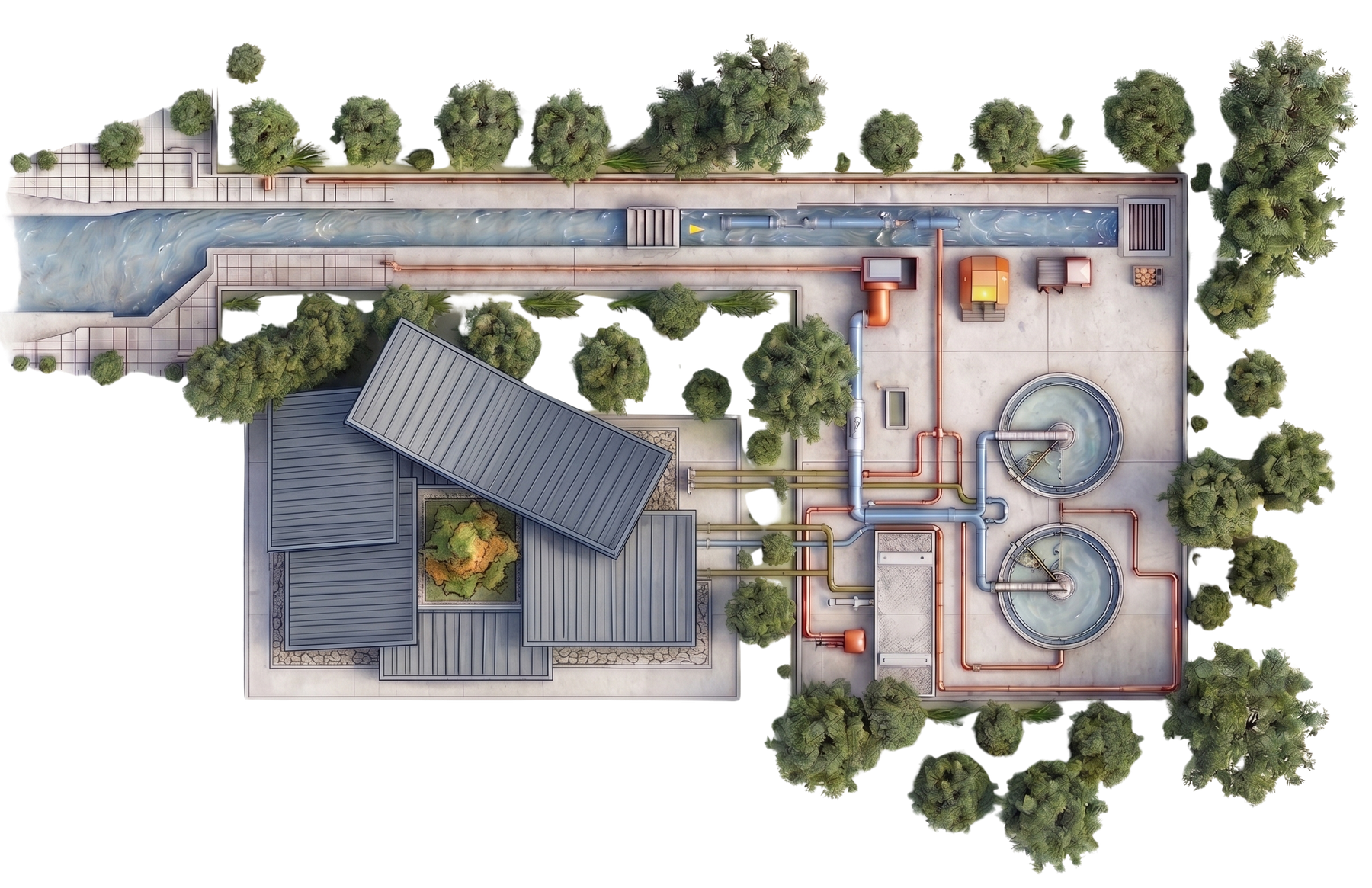
Aerial schematic: data center top-left, three-loop thermal interface, wastewater treatment plant on the right.
Three MicroLink modules. One thermal story.
01
On the Boston programme structure

Which host category should we prove first?

The programme has three host categories under review. Edge sites are the smallest commitment and the fastest path to deployment. District energy is the largest customer match. Water treatment is the deepest thermal integration. Where should the first deployment land?

Rank the top three0 of 3
0 / 1500
Submitted. 0 people have shared their view on this so far.
02
On BERDO

What turns BERDO heat recovery credit from interpretation into formal pathway?

The BERDO Review Board has Section 9.A.a.ii.4 discretion to recognise alternative emissions factors. We have a technical case. What converts case into recognised methodology?

Rank the top three0 of 3
0 / 1500
Submitted. 0 people have shared their view on this so far.
03
On Boston's compute customer profile

Where does Boston's AI compute demand consolidate first?

Four clusters, four buyer profiles, four procurement cycles. Where does the first 20 MW of contracted demand actually land?

Rank the top three0 of 3
0 / 1500
Submitted. 0 people have shared their view on this so far.
04
On heat as a first-class output

What turns heat recovery from deal-by-deal into default specification?

Same question as the San José deck. We keep asking it because the answer keeps shifting.

Rank the top three0 of 3
0 / 1500
Submitted. 0 people have shared their view on this so far.
05
On Boston as a category-defining build

What should this programme answer first?

Boston is seven host candidates, four customer clusters, one BERDO ordinance, one state administration, one city administration, and one 18-month window. From your seat, what most needs settling?

Rank the top three0 of 3
0 / 1500
Submitted. 0 people have shared their view on this so far.
A2 · LIBRARY

The collection of MicroLink Briefings.

Domain knowledge we accumulate as we work with partners. Each briefing is a working document.
WRRF REFERENCE · V1 · APRIL 2026 COMPLETE

Wastewater treatment, a working reference.

A briefing on wastewater treatment processes: anaerobic digestion, MHP, thermal hydrolysis, cogeneration, biogas pathways, and how MicroLink integrates with them. Originated from a technical conversation with Maddy Fairley-Wax (Jacobs Solutions).

Open briefing →
NCP ARCHITECTURE · IN DEVELOPMENT OPEN INVITATION

The 1 MW pod, in detail.

Quantum-X800 + AC SU at 576 GPUs, three-loop thermal architecture, diesel-free 2N power topology. The reference architecture for the canonical pod is being written with NVIDIA, so the document reads as a joint template that other deployments can adopt.

Build it with us
SOVEREIGN MUNICIPAL AI · IN DEVELOPMENT OPEN INVITATION

The product, end to end.

Confidential Computing on Hopper / Blackwell, BlueField-3 multi-tenant isolation, Run:ai per-tenant clusters, Llama-Nemotron sovereign fine-tuning. The stack is being co-authored with NVIDIA's product and public-sector teams, so the document reads the way both organisations would describe it.

Build it with us
BERDO 2.0 PATHWAY · WORKING DOCUMENT · MAY 2026 OPEN INVITATION

Heat recovery as a BERDO compliance pathway.

How MicroLink heat recovery integrates with Boston's Building Emissions Reduction and Disclosure Ordinance. Heat exported into a host facility's thermal infrastructure displaces natural gas at the host meter and counts directly on reported emissions. The working document advancing heat recovery as a recognised methodology with the BERDO Review Board.

Build it with us
GENERATION STRATEGY · UNDER EXPLORATION OPEN INVITATION

Generating our own electricity at the site.

On-site electricity generation configurations under exploration across Boston host categories. Biogas SOFC at water sites · behind-the-meter cogeneration at district sites · solar plus battery across all sites. Posture is open and evolving.

Build it with us
CUSTOMER CLUSTERS · WORKING DOCUMENT · MAY 2026 OPEN INVITATION

Four customer clusters across greater Boston.

Boston AI compute demand geography. Kendall AI-native and biotech · Longwood hospital AI · Allston Harvard research · Financial District BERDO-forced. 80 to 220 MW addressable. Each cluster paired with a host site.

Build it with us
MGHPCC POSITIONING · STATE VARIANT · MAY 2026 OPEN INVITATION

The second chapter is heat · MGHPCC positioning brief.

A heat-recovering, grid-flexible, containerised path for AICR ST2 and ST3 on the undeveloped acreage at MGHPCC. Prepared for the Massachusetts AI Hub, EOED, and the EPRI DCFlex bridge.

Build it with us
More briefings to follow, added as the work continues.
A3 · References

Glossary, sources, and citations

Technical terminology used throughout this working document, followed by the primary, regulatory, and industry sources behind the figures and claims.

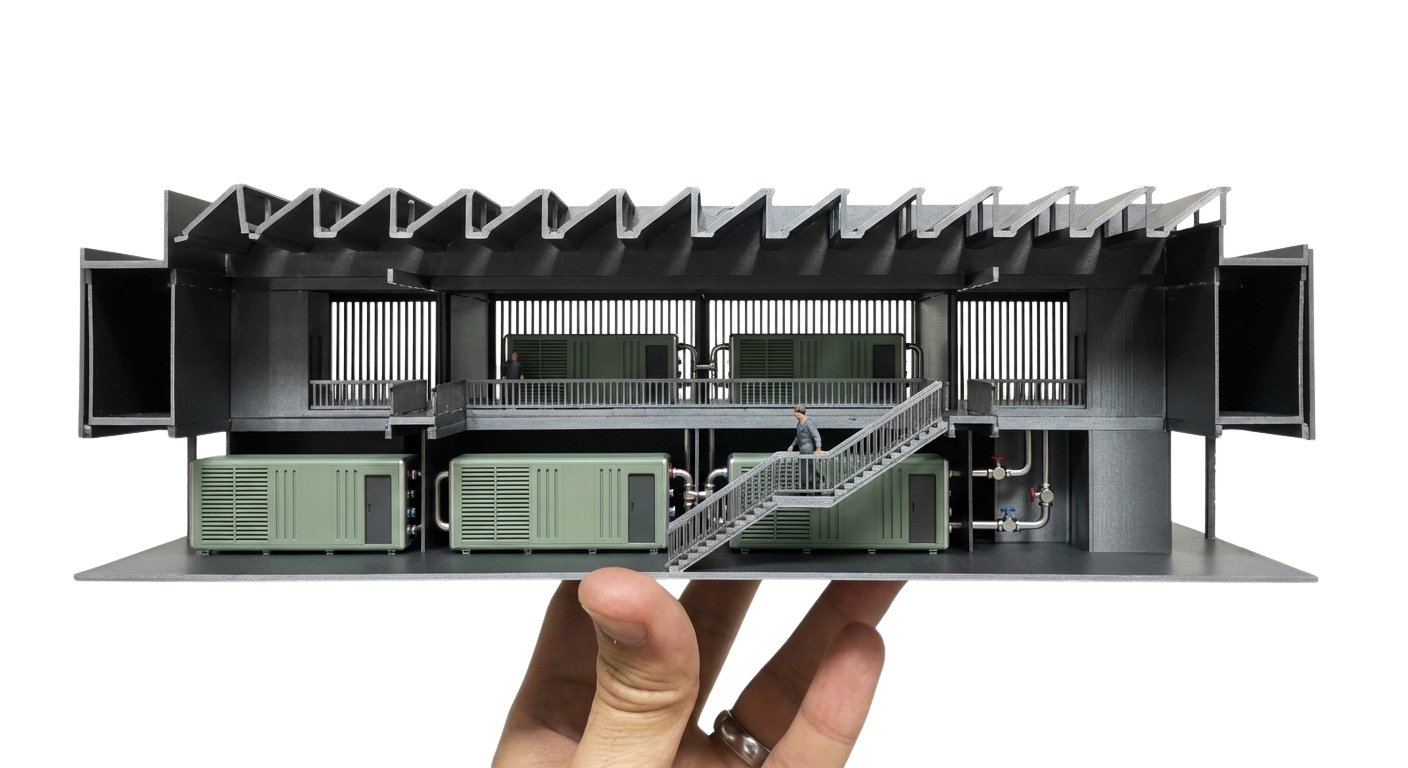
Physical scale model of a MicroLink two-container compute module, shown in section to reveal internal layout
Glossary
ACP
Alternative Compliance Payment; $234 per metric ton CO2e under BERDO 2.0 for buildings exceeding the cap.
BERDO
Building Emissions Reduction and Disclosure Ordinance 2.0; Boston's binding emissions ordinance signed October 2021, first binding year 2025.
BPDA
Boston Planning and Development Agency.
CDU
Coolant Distribution Unit; isolates the chip-side fluid loop from the facility loop and provides redundant pumping.
CHP
Combined Heat and Power.
CI
Carbon intensity, expressed in grams of CO₂-equivalent per megajoule, used by CARB LCFS.
CIN / TAN / SMN
The three Ethernet/InfiniBand fabrics in the NCP architecture: cluster interconnect, tenant access, and secure management.
D3 RIN
Federal cellulosic Renewable Identification Number under the EPA Renewable Fuel Standard, Pathway Q for RNG dispensed as transportation CNG.
DA
Definitive Agreement; the substantive partnership contract concluding the EOI → LOI → DA sequence.
DTC
Direct-to-Chip liquid cooling; cold plate mounted directly on the GPU/CPU package.
EEA
Massachusetts Executive Office of Energy and Environmental Affairs.
EOED
Massachusetts Executive Office of Economic Development.
EOI
Expression of Interest; the short-form first-commitment instrument signed at Day 30, scoped to authorise inclusion of a thermal stub-out in the host's design-basis discussion.
EOTSS
Massachusetts Executive Office of Technology Services and Security.
ERE
Energy Reuse Effectiveness; the ratio of energy reused outside the data center to IT energy. Published alongside PUE in the MicroLink reporting standard.
GLSD
Greater Lawrence Sanitary District.
GMP
Guaranteed Maximum Price; the second-phase commercial structure of a progressive design-build contract.
HEEC
Harbor Electric Energy Corporation; Eversource subsidiary serving Deer Island via 115 kV submarine cable.
LCFS
Low Carbon Fuel Standard; California's transportation fuel decarbonisation programme administered by CARB.
LOI
Letter of Intent; the second-stage commitment instrument signed at Day 90, capturing the technical specification and commercial framework principles.
Mass Leads Act
Massachusetts capital programme, $4B authorised 2024.
Mass Wins Act
Massachusetts capital programme, $305M signed April 2026.
MassCEC
Massachusetts Clean Energy Center.
MassDEP
Massachusetts Department of Environmental Protection.
MCFC
Molten Carbonate Fuel Cell; produces electricity, recoverable heat, and hydrogen from biogas at ~47% electrical efficiency.
MGHPCC
Massachusetts Green High Performance Computing Center; Holyoke.
MMBtu
Million British thermal units; standard unit of energy commerce in US gas markets.
MWRA
Massachusetts Water Resources Authority; operator of Deer Island.
NCP
NVIDIA Cloud Partner; NVIDIA's reference architecture and partner programme for AI compute facilities.
NPDES
National Pollutant Discharge Elimination System.
NVL72
NVIDIA's 72-GPU rack-scale unit (Blackwell GB200 and successor GB300 Vera Rubin); the atomic compute unit of an NCP facility.
PUE
Power Usage Effectiveness; the ratio of total facility energy to IT equipment energy in a data center.
RNG
Renewable Natural Gas; biogas upgraded to pipeline-quality natural gas for injection into utility distribution.
RWF
Regional Wastewater Facility; generic term for a municipal wastewater treatment plant.
SOFC
Solid Oxide Fuel Cell; the generation architecture under exploration at MicroLink water sites.
WRRF
Water Resource Recovery Facility; the contemporary term for a wastewater treatment plant operating with resource-recovery functions.
WWER
Wastewater Energy Recovery; MassDEP pilot programme, $5M allocated, up to 8 pilot sites.

Data centers as additive infrastructure

MicroLink deploys compute inside facilities that already exist, then routes the heat back into the host's process. The render shows a working concept: a glasshouse sitting above a compute module, drawing thermal energy that would otherwise be rejected to atmosphere. The same pattern works on a digester, a brewhouse, a district heat loop, or a hotel plant room. The data center stops being a parasitic load on the grid and starts being a thermal asset on the site.

Sources and citations
Primary sources & regulatory documents
  • Boston BERDO 2.0 OrdinanceSigned October 2021 · Policies and Procedures Section 9.A.a.ii.4.
  • BERDO Review Board Policies and ProceduresCurrent edition.
  • MassDEP Clean Energy Results ProgramWWER pilot programme guidance.
  • MWRA 2023 Greenhouse Gas Inventory41% reduction below 2006 baseline.
  • MassDEP Climate Protection and Mitigation Trust grantOctober 2024.
  • Mass Leads Act2024.
  • Mass Wins ActApril 2026.
  • Vicinity Energy public decarbonisation roadmapNet-zero portfolio 2050; Boston/Cambridge electrification ~2031.
  • ISO-NE interconnection guidelinesLarge-load and behind-the-meter generation procedures.
  • CARB LCFS Reporting ToolQ3 2025 transfer reports.
  • EPA Clean Watersheds Needs Survey 202217,544 publicly owned treatment works.
  • EPA Opportunities for CHP at WWTPs2011 update; plant-size distribution and AD subset.
  • IRS final rule · Section 45VOne Big Beautiful Bill Act, July 2025.
  • CPUC Decision 24-08-007Avoided Cost Calculator.
Industry sources & technical literature
  • MIT Decarbonization 2050 Working GroupDecember 2025 comparison report.
  • Boston University CISE FlexDCNSF $600K grant, September 2025.
  • EPRI DCFlex programme9-hub initiative.
  • Liquid AI / Insilico MedicineLFM2-2.6B-MMAI on private pharmaceutical infrastructure · March 2026.
  • Kempner InstituteGPU cluster expansion to 1,144 GPUs by Spring 2026.
  • BosTEN ProjectYear-long feasibility study 2025-2026.
  • IDEA US district energy directoryAnnual industry directory.
  • ENR Top 500 Design FirmsWastewater rankings, FY2024.
  • Argus MediaLCFS pricing analysis, 2025.
  • IETA · September 2025California Low Carbon Fuel Standard brief.